
← Back to the Collector’s Guide
A practical beginner’s guide to Canada’s two-dollar coins
Start with the toonies you already have. Set aside a few designs you like, note what you have found and decide what you want to add next. A small, organised collection gives you something specific to look for every time you check your change.
Canada introduced the toonie on February 19, 1996, replacing the two-dollar banknote. The familiar polar bear reverse was designed by Brent Townsend, and commemorative designs have since given collectors other subjects to explore. [1]
1. Choose a collecting goal you can finish
Choose one simple goal for your first collection. You can expand it as you learn which coins interest you most.
- Collect by design: start with five different reverse designs. This makes each new find easy to recognise.
- Collect by year: choose a short range of years or dates with personal meaning, then check which issues exist for those years.
- Collect a theme: focus on Canadian landmarks, wildlife or remembrance, and keep a short list of the designs you want.
Write your goal at the top of your checklist and set a comfortable spending limit. “Five designs I enjoy” is a useful first milestone. Completing every year, design and variety can be a later project.
2. Know what to keep from your change
Look at both sides of each coin under good light. Record the year, the reverse design and any official colour version. Compare new finds with the coins already on your list before deciding whether to keep them.
For your starter collection, choose examples with a readable date and clear design. If you find a duplicate, compare the two and keep the one you prefer. A coin with wear can still be an enjoyable part of a collection.
If a coin looks unusual, photograph both sides and compare it with a reliable reference before calling it an error. Our Mint Error or Damage guide explains what to check. An unfamiliar design or a mark on the surface is a reason to investigate.
When you want to fill a specific gap, browse the Circulated Toonies collection and compare the date, design and stated condition with your checklist.
3. Understand circulated and uncirculated
Circulated coins have been used in everyday transactions and may show wear. They fit naturally into a collection built from change.
Uncirculated coins show no wear, but they can still have contact marks from production and handling. The word “uncirculated” alone does not guarantee a flawless surface or a particular numerical grade. [2]
You can collect either condition or keep both in clearly labelled groups. If you prefer uncirculated examples, explore the Uncirculated Toonies collection. Read our coin grading guide before comparing grade terms or paying extra for condition.
4. Try a colourized and uncolourized pair
Some commemorative toonies were officially issued in both colourized and uncoloured versions. Recording each version separately gives you a clear two-coin collecting goal. Confirm which versions were issued for each design before planning a pair.
The 2026 Royal Canadian Legion 100th anniversary toonie is one example issued in both versions. The 2026 CN Tower 50th anniversary toonie is another. [3] [4]

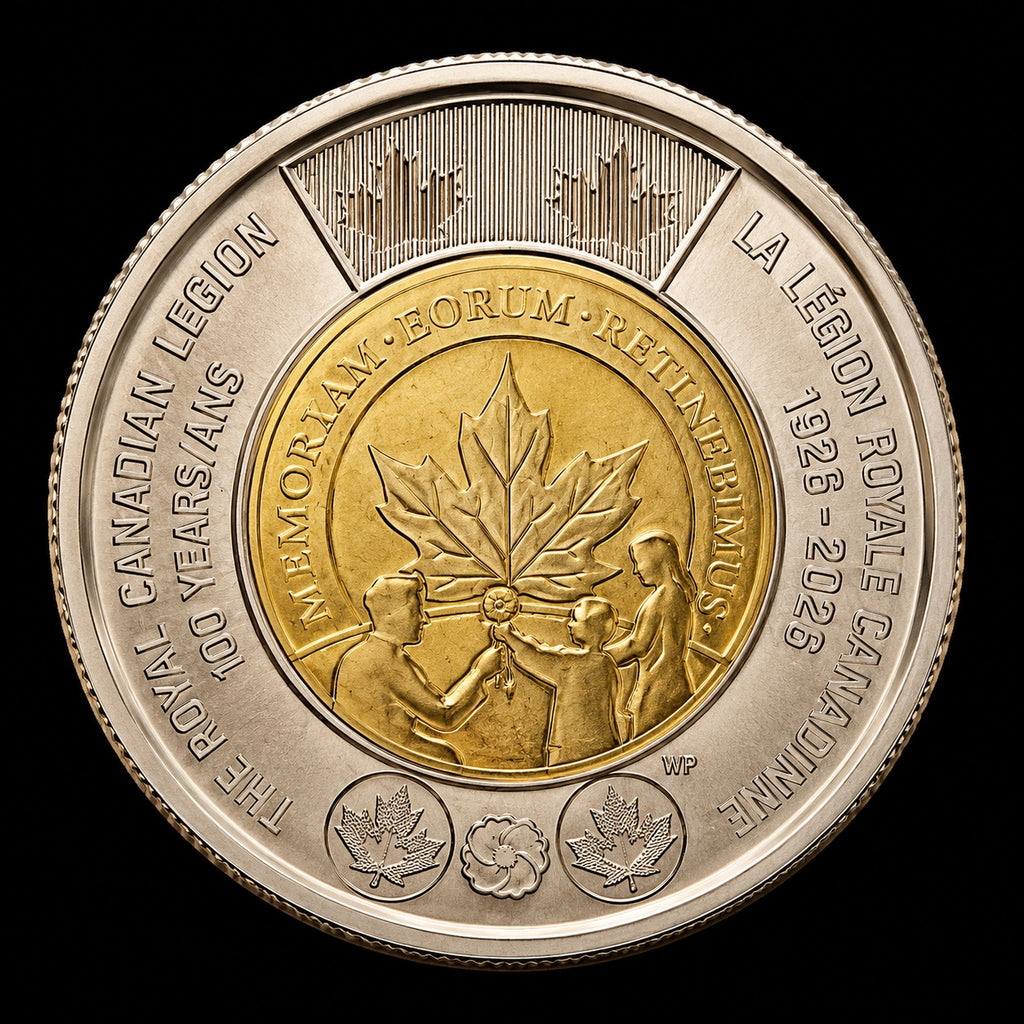
Keep version and condition separate. A colourized coin can be circulated or uncirculated. An officially uncoloured version is not, by itself, a missing-colour error.
Explore these two-coin sets
- 2026 Royal Canadian Legion toonie set: one colourized and one uncolourized coin, both listed as uncirculated.
- 2026 CN Tower toonie set: one colourized and one uncolourized coin, both listed as uncirculated.
Use the product pages for current prices, availability and the full description of what is included.
5. Choose holders that fit your toonies
Handle coins by their edges and store them individually so they do not rub together. Avoid polishing or rubbing a coin to make it look brighter; this can alter its surface. Our coin-care guide explains why. [5]
A standard Canadian circulation toonie measures 28 mm across. [1] Our capsule and cardboard-holder options use different size labels because they measure different parts of the holder.
| Holder | Toonie option | Useful feature |
|---|---|---|
| Lighthouse Ultra Perfect Fit capsules | 28 mm; box of 10 | Rigid, clear shell for viewing an individual coin. |
| Lighthouse Matrix 2×2 holders | 30 mm opening; packs of 25 or 100 | Writable card with a self-adhesive closure. |
The 30 mm flip opening does not mean the toonie is 30 mm in diameter. Each box or pack contains one selected size. Check dimensions before ordering for unusual collector issues, and use the Collector Supplies size guide when organising other denominations.
6. Keep a record you will actually use
A notebook or simple spreadsheet is enough. The Royal Canadian Mint recommends keeping an inventory with identifying details, acquisition information and storage records. [6] For a beginner’s toonie collection, use these fields:
- Year and design: for example, “2026, Royal Canadian Legion.”
- Version: colourized or uncolourized, where applicable.
- Condition notes: describe visible wear or marks; use a certified grade only when the coin has one.
- Quantity and source: note whether you found it in change, received it as a gift or bought it.
- Date acquired and amount paid: record your actual cost, separately from any later value estimate.
- Storage location: identify the holder or box so you can find the coin again.
Your first collecting session
- Choose a goal, such as five different toonie designs.
- Check the change you already have and set aside examples that fit.
- Record each coin’s year, design, version and condition.
- Put each keeper in a correctly sized holder.
- Make a short want list before your next search or purchase.
Your next useful addition is a coin that fits your goal. Keep checking your change, learn the details of each find and let the collection grow at a pace you enjoy.
Sources and further reading
- Royal Canadian Mint: two-dollar circulation coin history and specifications
- Royal Canadian Mint: guide to coin grading
- Royal Canadian Mint: 2026 Royal Canadian Legion circulation coin announcement
- Royal Canadian Mint: 2026 CN Tower circulation coin announcement
- Bank of Canada Museum: caring for your coins
- Royal Canadian Mint: storing and cataloguing a collection